
(... and what to check before summer)
When a mid-January heatwave pushes temperatures past 40°C, your home relies entirely on your cooling setup to stay liveable. In Western Australia’s demanding climate, the dependable air conditioning Perth homeowners count on requires routine care to prevent sudden breakdowns, high electricity bills, and poor indoor air quality.
Dust storms, coastal salt spray, and long operating hours put substantial thermal stress on internal compressors, coils, and fans. Knowing how often to book a professional air conditioner service perth technicians recommend, and running through a basic pre-summer inspection, ensures your system runs smoothly when the heat arrives.
Air Conditioner Service Frequency by System Type
While a basic DIY filter wipe should be part of your seasonal routine, professional mechanical maintenance schedules depend on your equipment type, property location, and household usage patterns.
|
System Type |
Standard Household |
High Usage, Pets, or Coastal Suburbs |
Key Service Focus Areas |
|
Every 12 months (ideally spring) |
Every 6 months |
Return air filter media, motorised zone dampers, duct connections, indoor fan barrel, refrigerant running pressures, and outdoor coil washdown. |
|
|
Every 12 months |
Every 6 months |
Indoor coil deep-clean, anti-bacterial blower wheel pressure washing, condensate drain flush, and louvre motor checks. |
|
|
Every 12 months |
Every 6 to 12 months |
Internal condensate lift pump testing, water drain pan sterilisation, four-way directional louvre calibration, and filter clean. |
|
|
Twice yearly (pre-summer start & winter shutdown) |
Twice yearly |
Water distribution pads, bleed-off valve operation, pump testing, dumping old water, and fitting winter covers. |
If your system operates daily through winter for heating and constantly through summer for cooling, scheduling comprehensive ac maintenance perth specialists provide every six months prevents premature wear on inverter components.
The Essential Pre-Summer DIY Checklist
Waiting until a 42°C weekend to switch your system on for the first time is a gamble. Booking an emergency technician during peak summer can leave you waiting in the heat. Complete these simple checks during spring (October to November):
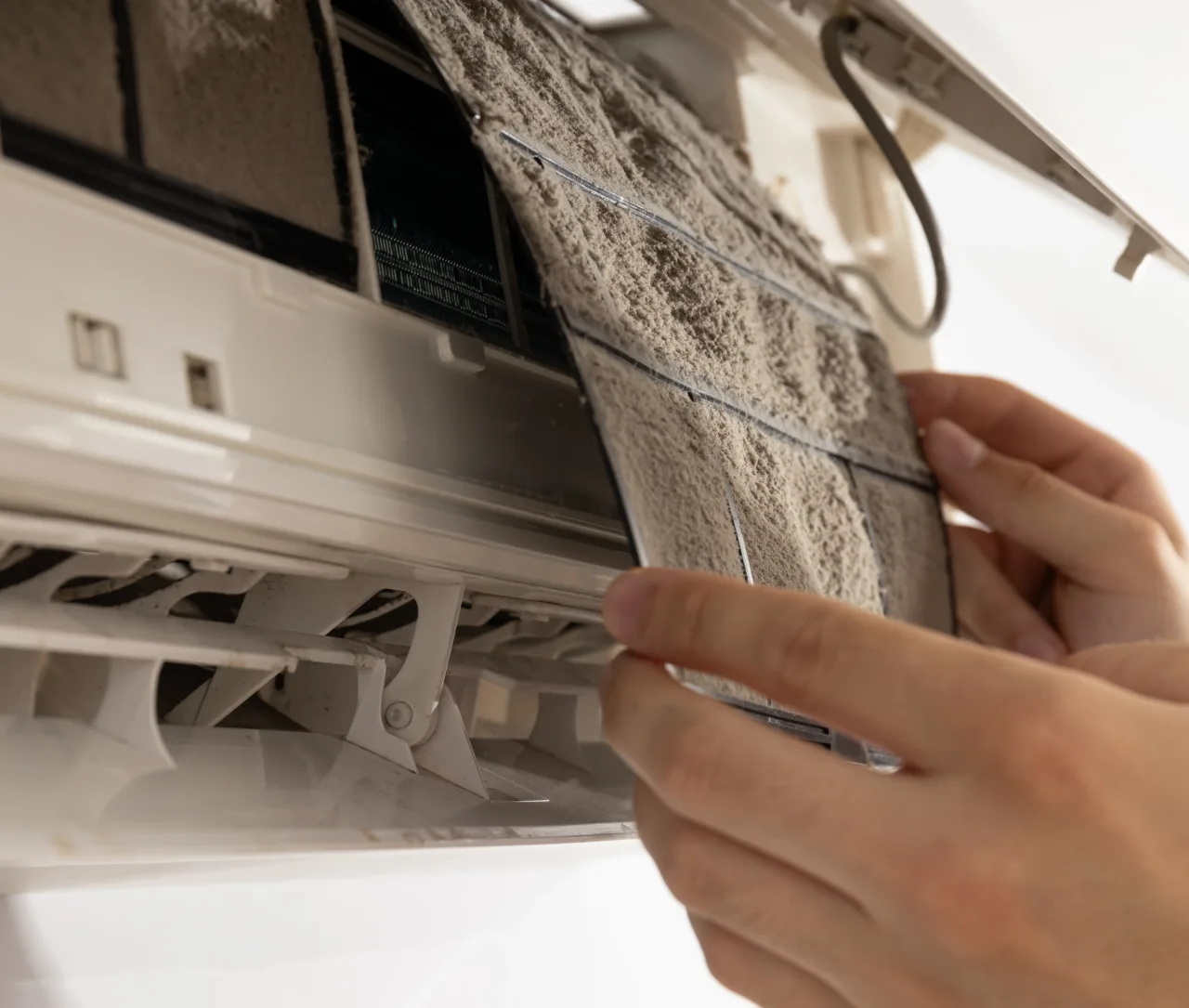
- Inspect and Wash the Return Air Filter: Dust, pet dander, and pollen quickly clog intake grilles. When airflow is choked, your system works twice as hard, drawing more power while cooling less effectively. For a step-by-step walkthrough on proper maintenance methods, check out our guide on the importance of cleaning your air filter.
- Clear the Outdoor Condenser Surroundings: Your outdoor unit requires completely unrestricted airflow to reject heat from your home:
- Maintain at least 500mm to 1000mm of clearance around the condenser.
- Cut back overgrown shrubbery, vines, and low-hanging tree branches.
- Clear dried leaves, lawn clippings, and cobwebs from around the base and fan grille.
- Run a Spring Test-Drive: Pick a mild 24°C spring morning to test your cooling cycle:
- Set your wall controller or smart thermostat to "Cool" at 21°C.
- Let the system run uninterrupted for 20 to 30 minutes.
- Confirm that cool air is actively flowing from every ceiling or wall diffuser.
- If you have zoned ducted air conditioning, open and close individual rooms on your touchpad to verify that the motorised dampers respond smoothly.
- Check External Drain Outlets: Locate the external PVC condensate pipe on your exterior wall. While the air conditioner is running in cooling mode, water should steadily trickle out. If there is zero runoff during prolonged humid operation, or if water is pooling near the indoor unit, the drain line may have an algae blockage or dirt trap.
- Replace Controller Batteries: If your system uses handheld remotes or wireless zone temperature sensors, fit fresh alkaline batteries before the summer season begins to avoid communication dropouts.
What a Professional AC Cleaning and Maintenance Service Covers
A professional ac cleaning service goes far beyond surface-level dusting. While a homeowner can rinse an intake screen, licensed refrigeration mechanics inspect the high-voltage electrical components, refrigeration pressures, and sealed airflow paths that dictate system longevity.
A comprehensive air conditioner servicing appointment covers:
- Hygienic Coil and Blower Sanitisation: Technicians apply specialised, non-corrosive foaming cleansers and low-pressure water to deep-clean the indoor evaporator coils, removing embedded mould, mildew, and microbial grime.
- Drain Pan Treatment & Flush: Clearing stagnant sediment and algae from the condensate tray and drain line to prevent indoor ceiling leaks and overflow damage.
- Refrigerant Line and Pressure Testing: Checking operating gas pressures, evaluating superheat/subcooling values, and inspecting flared pipe joints for hairline leaks.
- Electrical Safety and Component Testing: Checking compressor capacitors, inspecting printed circuit boards (PCBs), testing safety switches, and tightening electrical terminals that can loosen due to thermal expansion.
- Outdoor Fan and Coil Washdown: Removing corrosive ocean salt, dust layers, and road film from the condenser fins using fin-safe detergents.
- Zone Damper Calibration: For ducted layouts, inspecting electronic actuators and airflow dampers to ensure conditioned air reaches each zone without duct leakage.
Signs You Need a Repair Rather Than Routine Servicing
Routine maintenance is designed for operational systems. If your equipment shows symptoms of mechanical or electrical failure, booking standard preventative servicing will not fix the underlying component fault.
Call for dedicated air conditioning repairs or ducted repairs if you notice:
- Lukewarm Air Flow: If the fan blows room-temperature air despite the thermostat being set to 18°C, the system may have a failed compressor, blown inverter board, or lost refrigerant.
- Ice Forming on Coils or Copper Lines: Frost or solid ice building on the indoor coils or exterior pipework typically indicates severe airflow restriction or a critical refrigerant leak.
- Repeated Circuit Breaker Trips: If turning on the air conditioner immediately trips your home's main safety switch or circuit breaker, an internal electrical short, grounding fault, or seized motor requires urgent diagnostic testing.
- Squealing, Grinding, or Rattling Noises: Unusual metallic grinding or loud vibrations point to worn fan motor bearings, unbalanced blower wheels, or loose compressor mountings.
- Water Dripping from Ceiling Grilles: Blocked condensate lines, failed internal lift pumps, or cracked drain trays require immediate repair to prevent water damage to your plasterboard and flooring.
- Fault Codes Flashing on the Screen: Error codes (such as alphanumeric warnings on Daikin, Panasonic, or Hisense controllers) indicate the system has locked out to protect itself from critical component failure.
Protecting Your Investment Year-Round
Air conditioning systems in Western Australia are an essential investment. Booking an annual service in spring preserves energy efficiency, prevents mid-heatwave failures, and keeps manufacturer warranties fully valid.
If your system is due for a seasonal tune-up, or if you need an honest assessment of an aging unit, our direct-employed mechanics at CrispAir provide transparent advice backed by our Honest Diagnosis Promise, always showing you the clear written repair cost before discussing any system replacement.
Contact us today for professional air conditioning servicing.